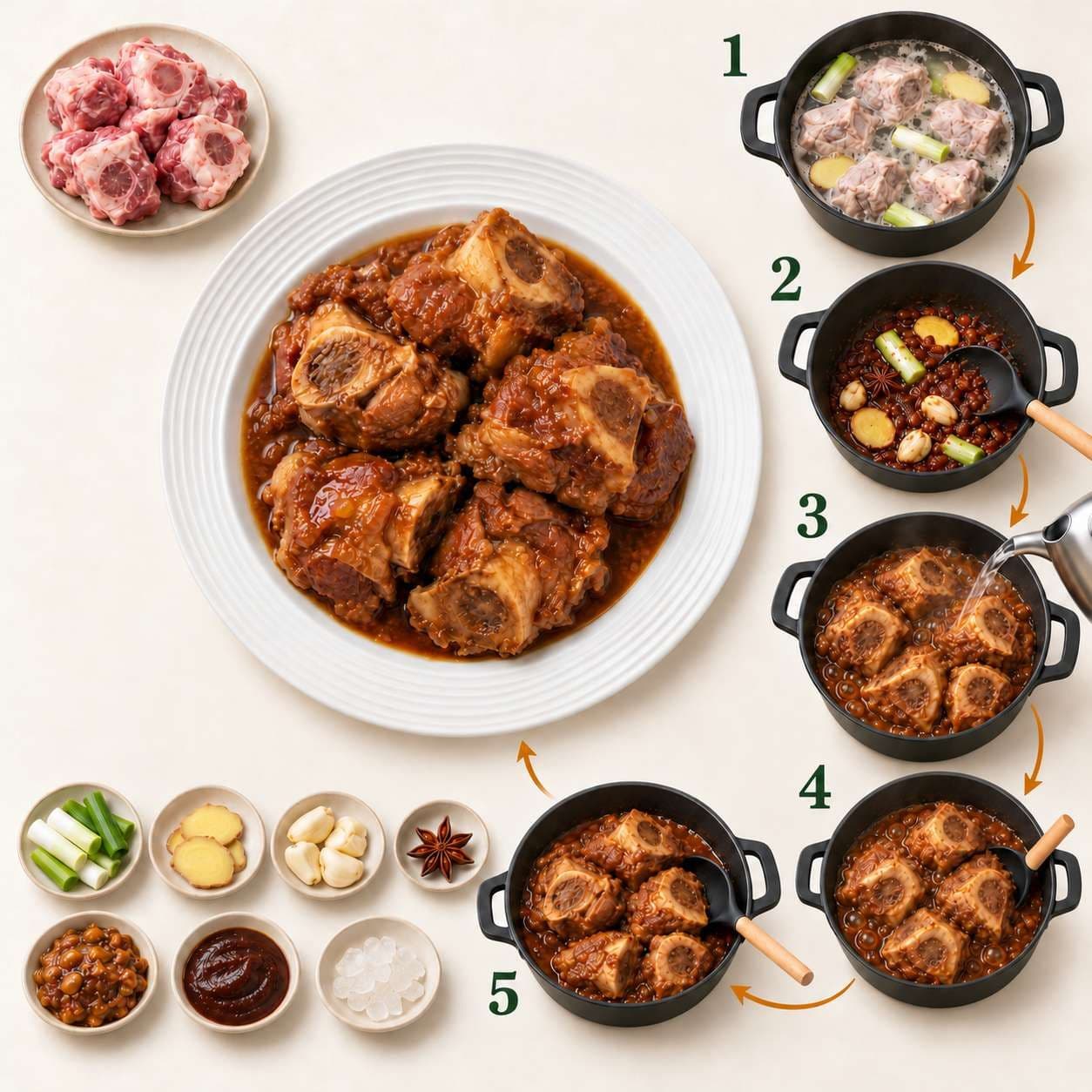
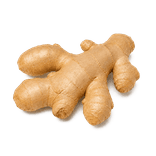
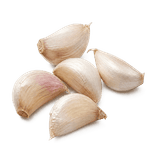
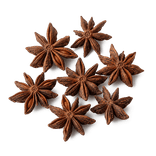
A quick visual overview of the key ingredients and cooking flow.


东北酱大骨
A quick visual overview of the key ingredients and cooking flow.

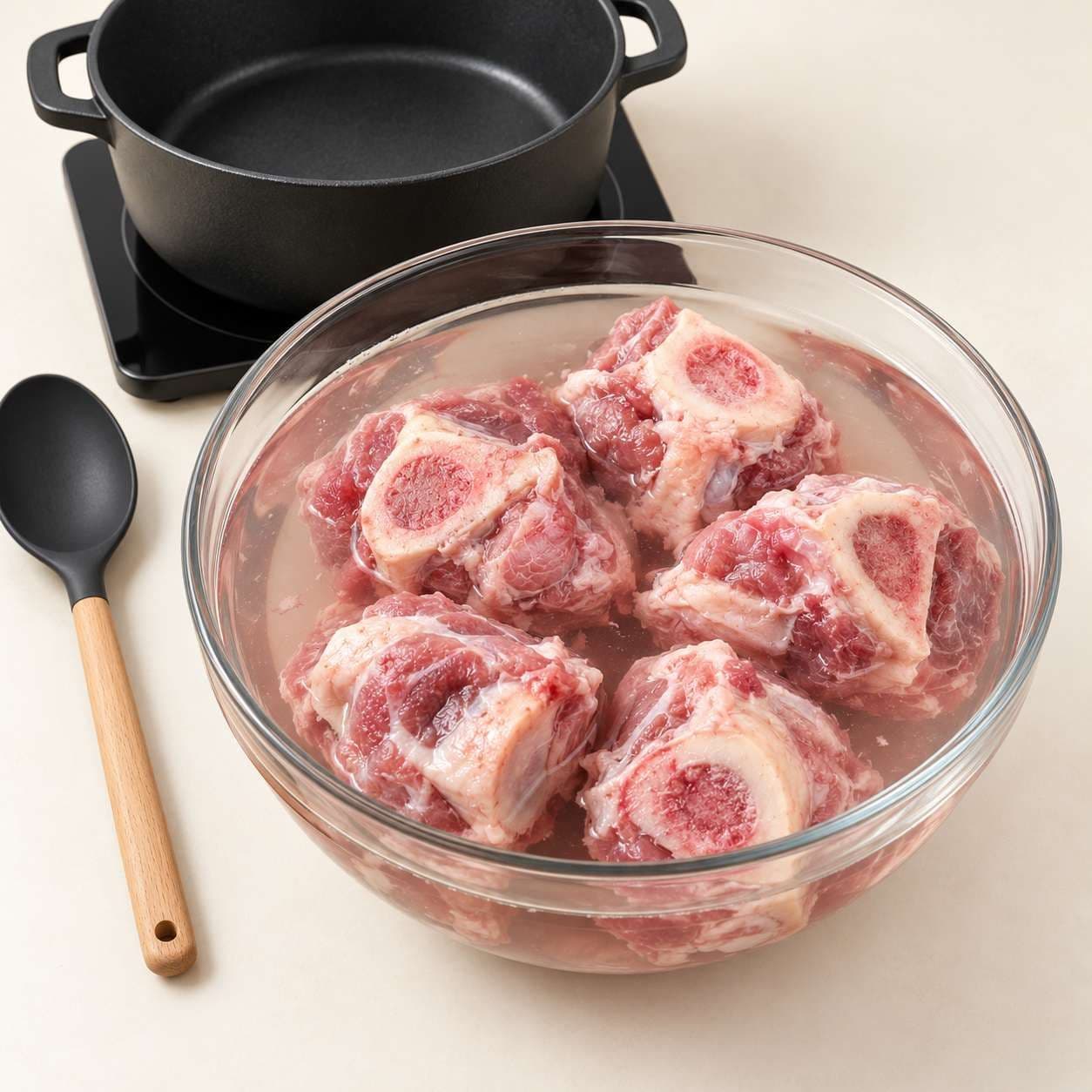
Remove visible bone fragments. Soak the bones in cold water in the fridge for 1 hour, changing the water once, then drain. Cut the scallion into 4 sections and crush the 4 garlic cloves. Reserve 2 scallion sections and 2 of the 6 ginger slices for blanching; keep the rest for frying.

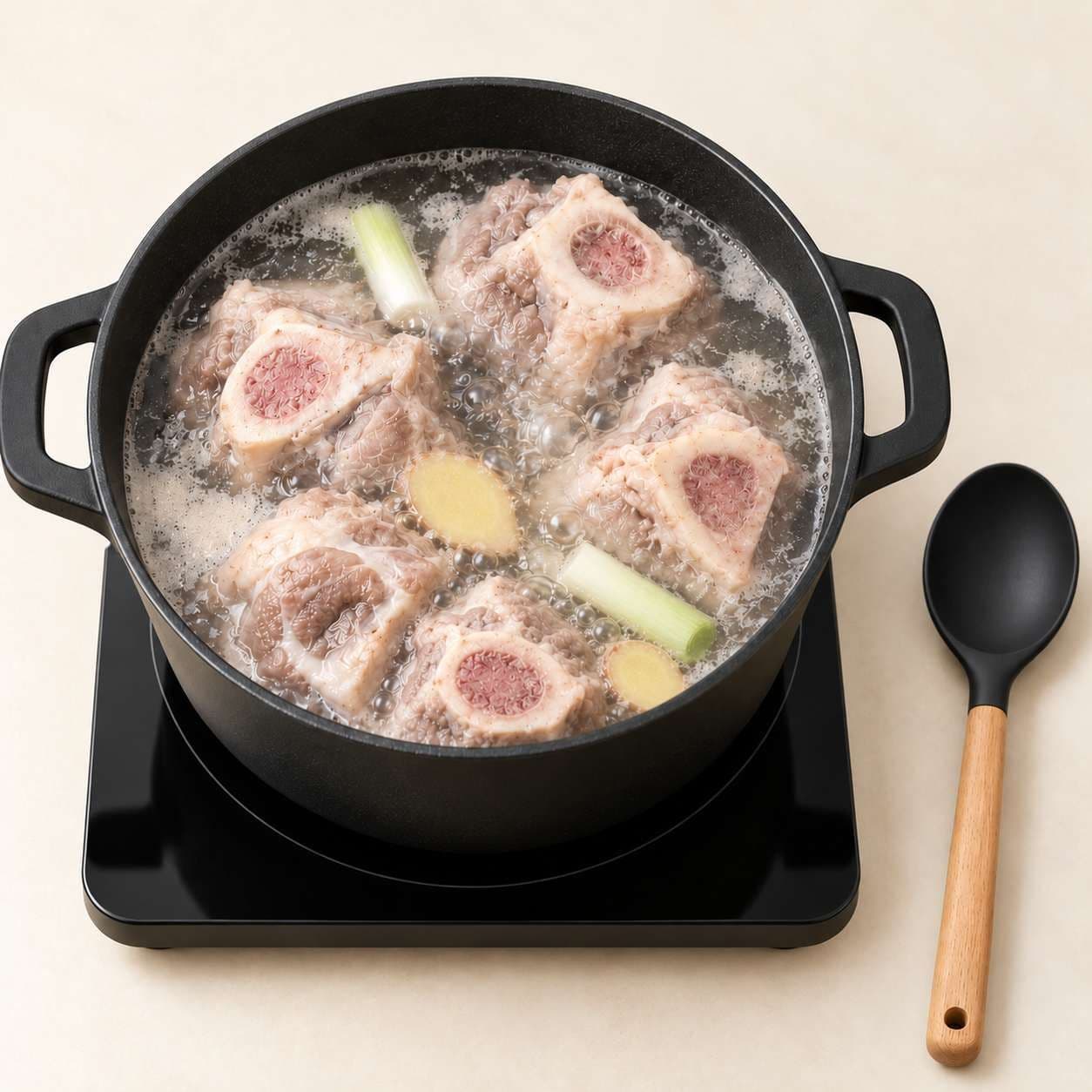
Put the bones in a deep pot and cover with cold water. Add the reserved 2 scallion sections and 2 ginger slices. Bring to a boil and cook over medium heat for 5–10 minutes, skimming until little new scum forms. Drain and rinse the bones with warm water. Discard the water and aromatics, then wash and dry the pot.

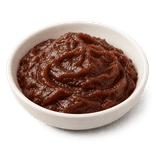
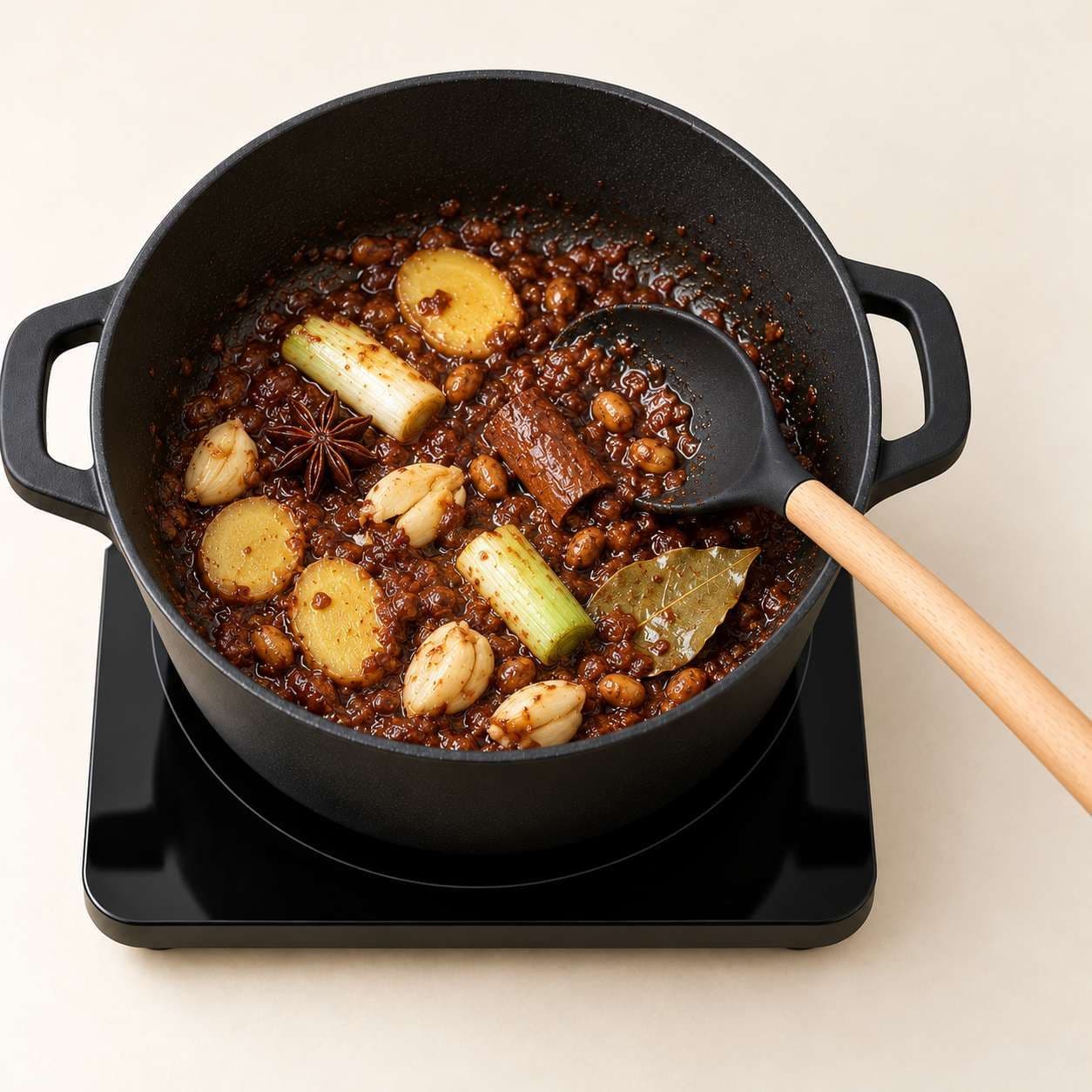
Heat 1 tbsp oil over medium-low heat. Fry the remaining 2 scallion sections, 4 ginger slices and all the garlic for about 1 minute. Add the star anise, cassia and bay leaf; fry for about 30 seconds. Lower the heat, add 2 tbsp soybean sauce and 1 tbsp sweet bean sauce, and stir for about 1 minute until fragrant. Keep the paste from scorching.

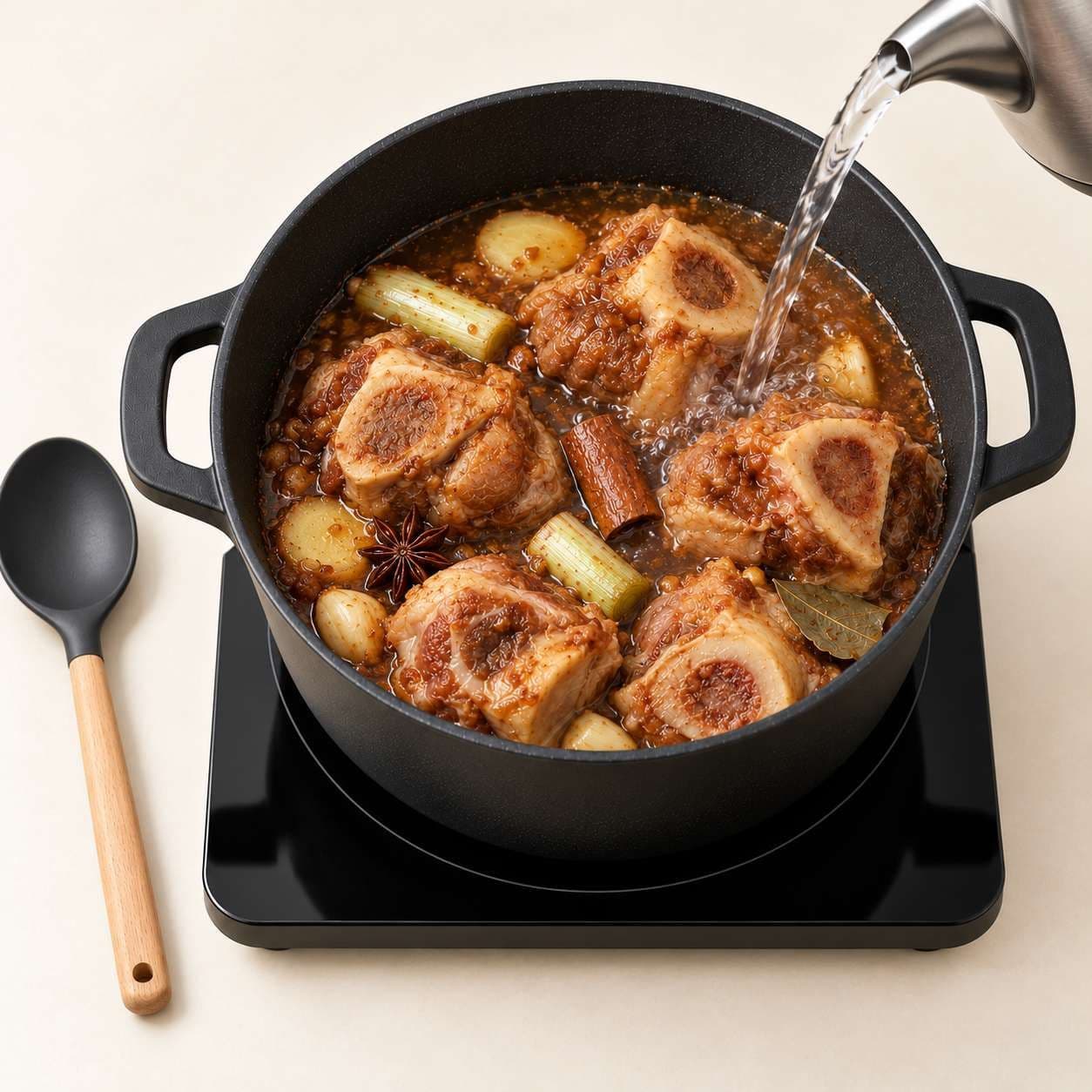
Return all the bones and turn to coat. Add 1 tbsp light soy sauce, 1 tsp dark soy sauce and 10 g rock sugar. Pour in hot water to just cover the bones; start with about 900 ml in a snug deep pot and adjust to the water level. Bring to a boil and skim.

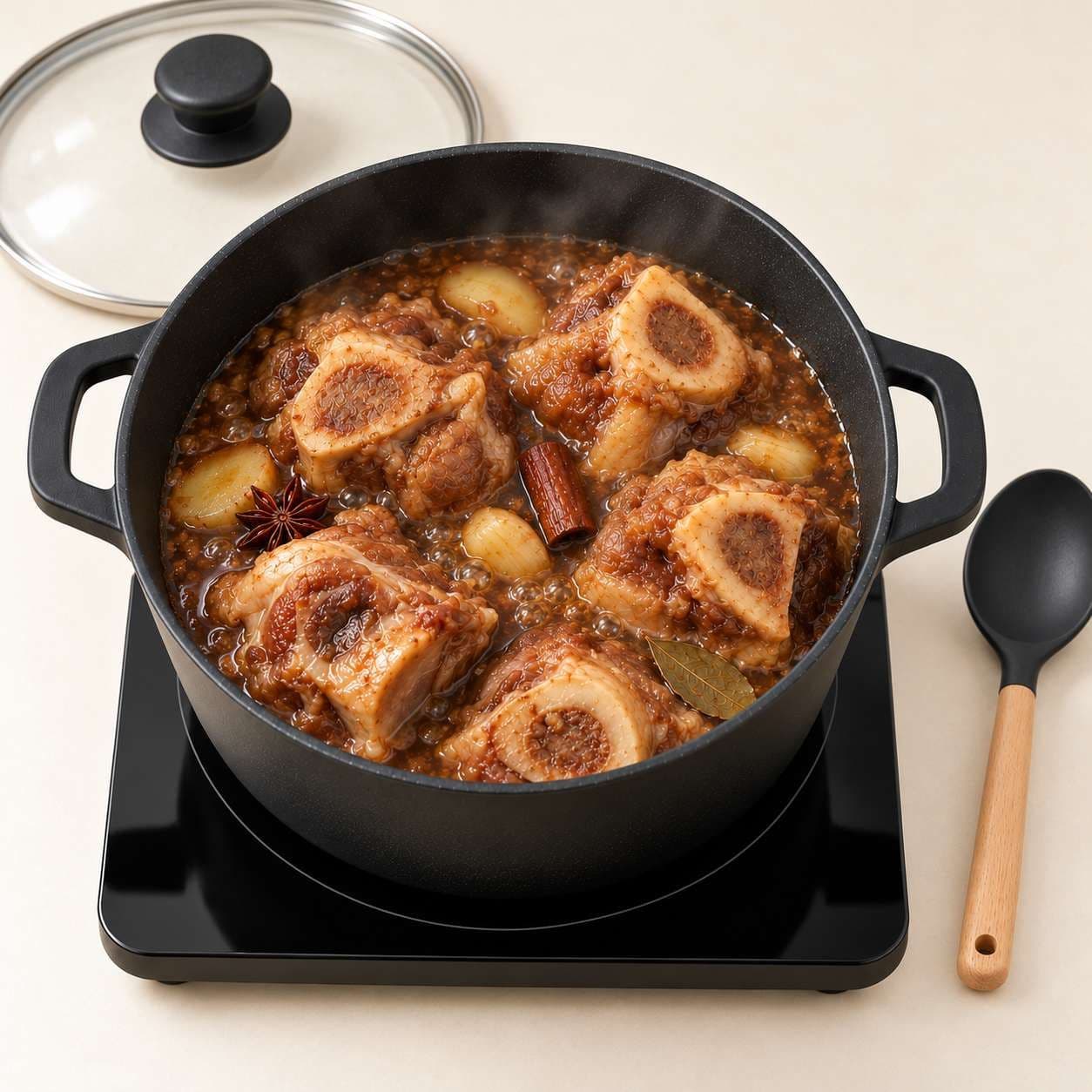
Cover and braise at a gentle simmer for 1½–2 hours, turning the bones once or twice. Add hot water if the level drops too low. The thickest meat and connective tissue should yield easily to a chopstick and pull gently from the bone; continue simmering while still firm.

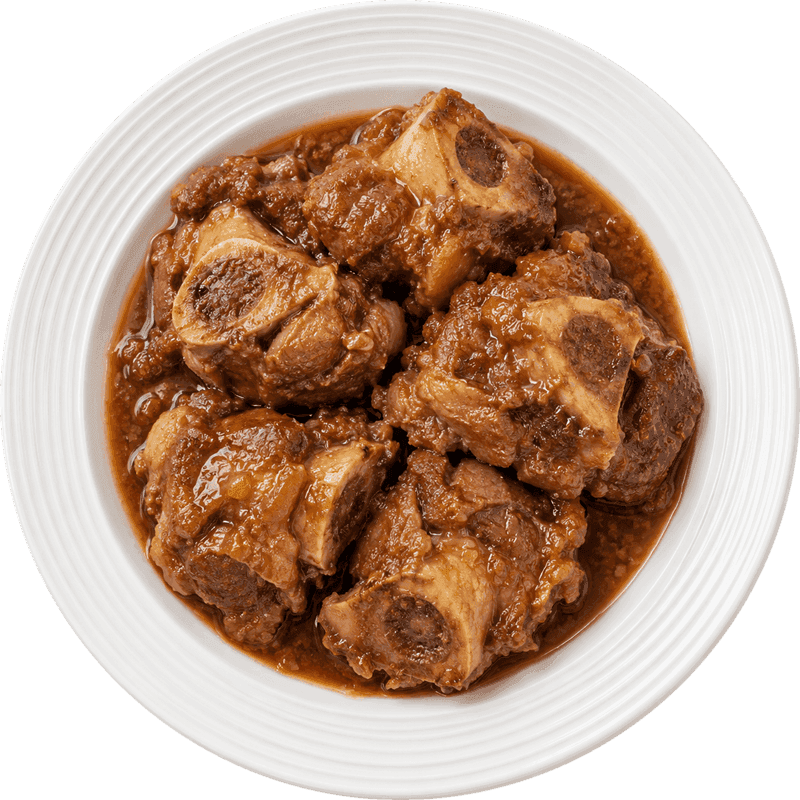
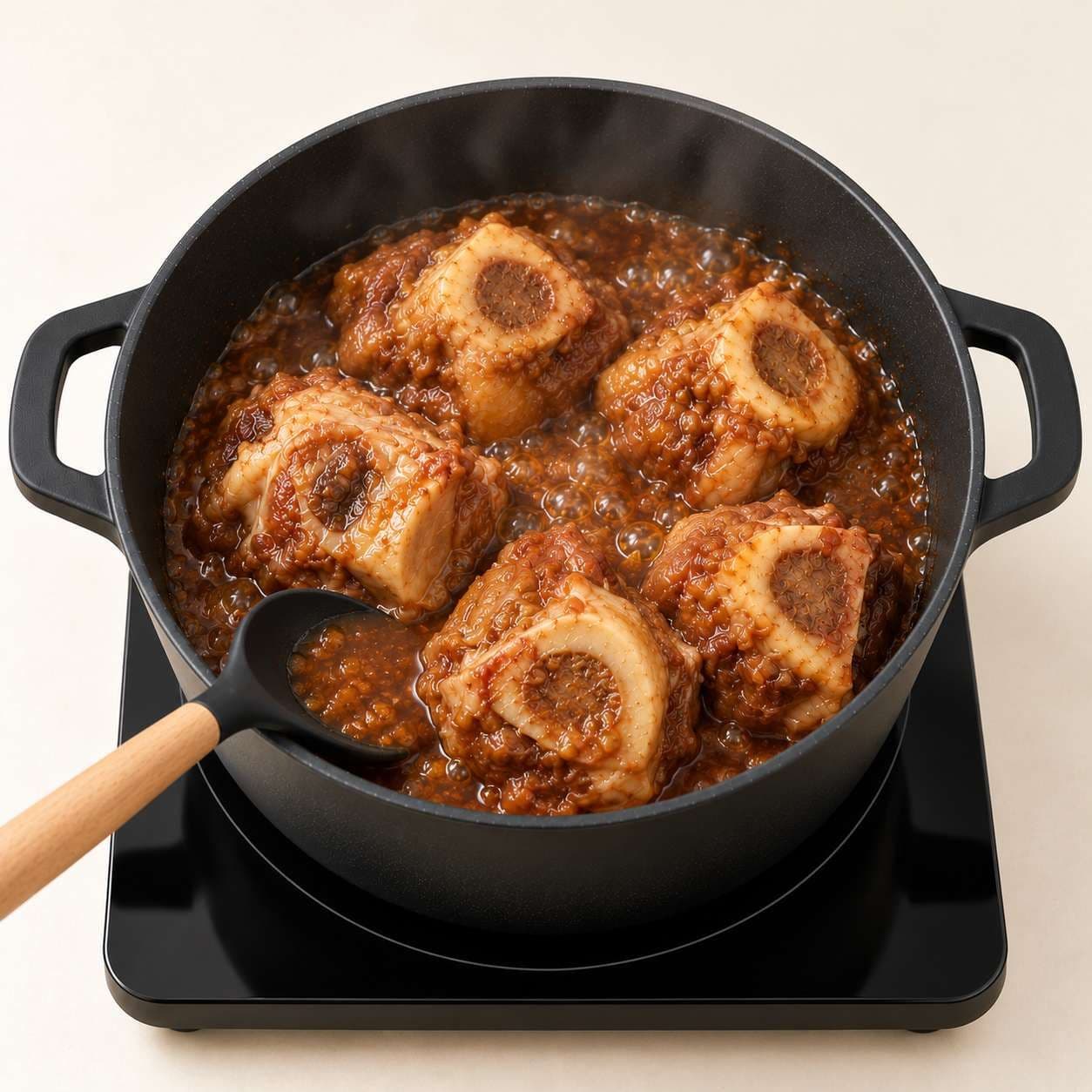
Remove the scallion, ginger, star anise, cassia and bay leaf, and skim excess surface fat. Uncover and reduce over medium heat for about 5–10 minutes, turning gently or spooning sauce over the meat. Stop when the sauce lightly coats the pork but remains spoonable. Transfer to a deep serving plate.